Idoneity-EHS is the whole programme — incidents, permits, waste clocks, contractors, ISO — in one system, at a published per-site price with the first 99 users at each site included. Built by a working safety professional, live in weeks, and the number is on the page before anyone asks for your phone number.
Permits in a cabinet, incidents in a spreadsheet, training in an inbox, contractor certs in an email thread. It works — right up until an inspector asks for something and you have four days to assemble what should have taken four minutes.
Licensed by the seat, so the people you most need reporting never get a login. Quoted on request, so you are three calls deep before you learn the price. Implemented over months of consultant hours — and the people who use it daily rarely have a kind word for it.
This is the third option: the full programme, priced per site so everyone reports, published so you can budget it, and live in weeks because it reads your permits and builds itself around them.
Both screens below are the real portal running with demonstration data — not a design concept. The first thing it shows you is the only thing that matters at 7 a.m.: what needs a person today.
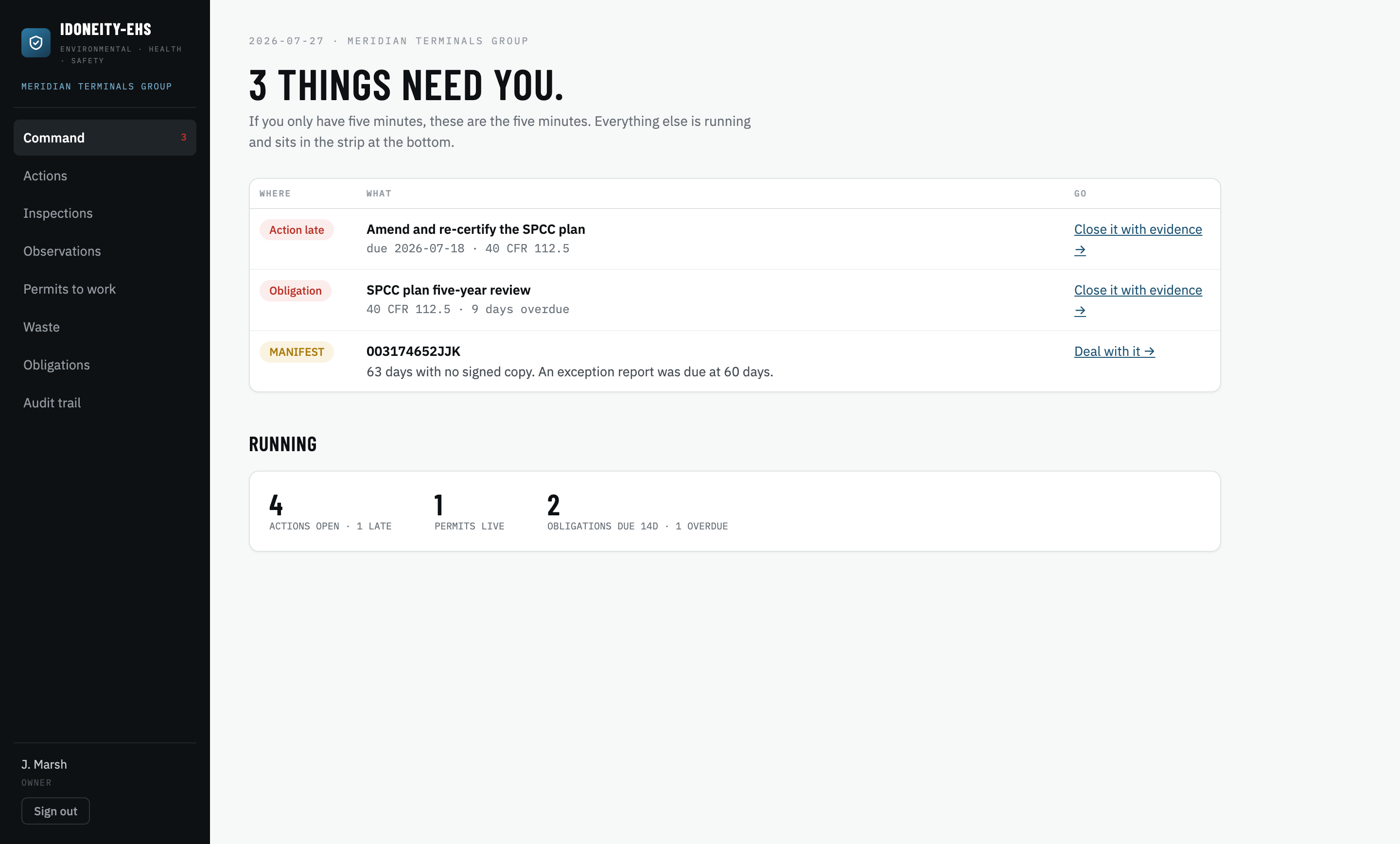
The command board. Not a dashboard of forty charts — the short list of what needs you, with everything else running quietly in the strip below it.
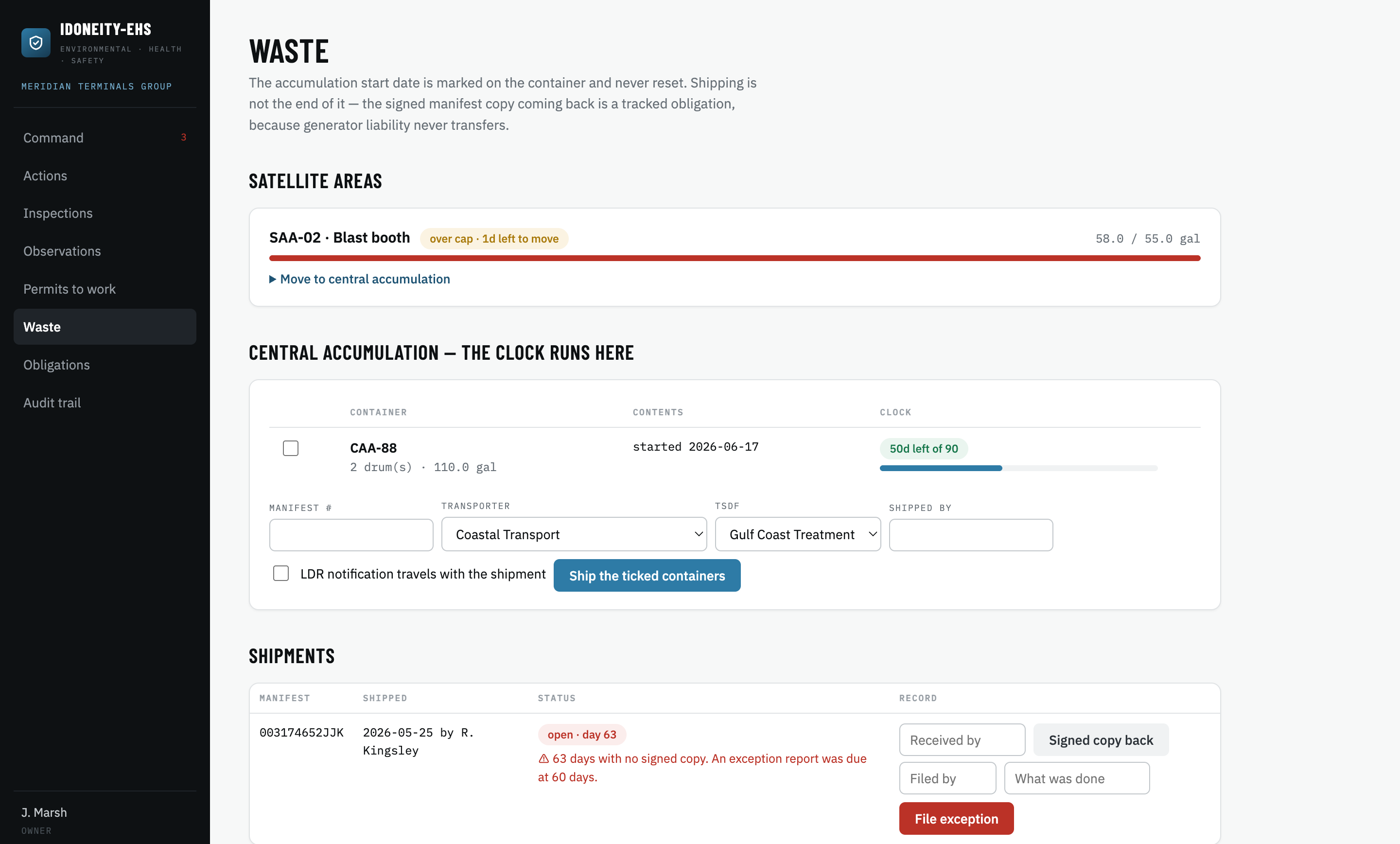
The waste screen. Accumulation clocks that start when the first drop lands and never quietly reset. A shipped manifest is not the end — the signed copy coming back is a tracked obligation, because generator liability never transfers.
Tools in this price band stop at inspections and incident forms. The parts of the job with federal clocks attached — the parts that decide whether an audit is an afternoon or a season — are the parts we built first.
Satellite areas with volume caps, central accumulation with the day count running, manifests tracked until the signed copy comes back — and an exception path when it does not.
Hot work, confined space, energy isolation. Gate checks that hold the permit closed until the controls are verified by a named person — not a checkbox theatre.
Upload the permit; each condition becomes a typed obligation with an owner, a due date, and the citation it came from. The compliance calendar builds itself.
Impact categories across the whole operation, and gates that hold a startup closed until the reviews are actually done. A change nobody signed off does not start up.
There are cheaper tools; they cover a fraction of this programme and their bills grow in ways the sticker never mentioned. Ours does not. Per-user licensing also does something worse than cost money — it makes near-miss reporting a budgeting decision, and near misses are the leading indicator the software was bought for.
Every one of these is a judgement with a name attached, and software that quietly makes them is how organisations end up confidently wrong. The agents draft. People decide.
Worth a longer look? We can send indicative pricing for your sites — five fields, no call.